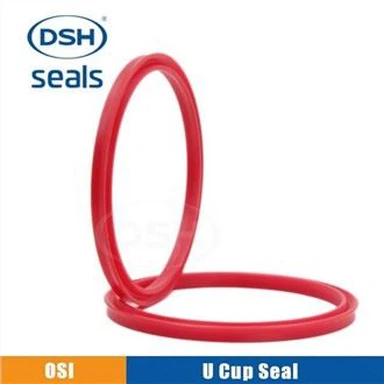
Installation requirements for sealing gaskets
Feb 24, 2023
(1)Seal Gasket and flange sealing surface should be cleaned, there should be no impact on the sealing performance of the connection scratches, spots and other defects exist.
(2)The outer diameter of the seal gasket should be smaller than that of the flange seal surface, the inner diameter of the seal gasket should be slightly larger than the inner diameter of the pipeline, the difference between the two inner diameters should generally take 2 times the thickness of the seal gasket to ensure that after compression, the inner edge of the sealing gasket shall not extend into the container or tube to prevent the flow of fluid in the container or tube.
(3)The pre-tightening force of seal gasket should not exceed the design stipulation, lest the seal gasket loses the springback ability by excessive compression.
(4)When the seal gasket is pressed, it is best to use a torque wrench. For large bolts and high strength bolts, it is best to use a hydraulic tightening device. The tightening torque should be calculated according to the given sealing gasket, and the size of hydraulic pressure should also be determined by calculation.
(5)When installing the sealing gasket, the nuts should be tightened in sequence. But it should not be twisted once to reach the design value. General should cycle at least 2-3 times, so that the seal gasket should be distributed evenly.
(6)For pressure vessels and pipelines with flammable or explosive media, safety tools should be used when replacing the sealing gaskets to avoid sparking with Farlane or bolts, which may lead to fire or explosion.
(7)If there is leakage in the pipeline, it must be replaced or adjusted after depressurization, installation gasket, no pressure operation.